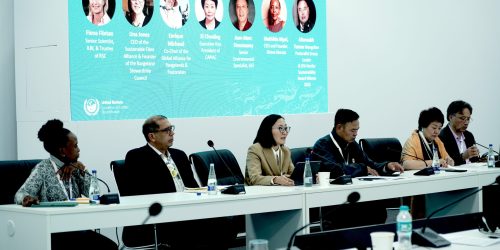
September marked an important moment for the Rangeland Stewardship Council (RSC). After several months of Strategy Task Group discussions, stakeholders gathered in Edinburgh (and online) for a full-day workshop aimed at bringing shape and clarity to the RSC’s next chapter.
Led by Anne Gillespie, RSC’s Strategic Lead, the process unfolded gradually: first through focused task group sessions, then through a larger workshop designed to consolidate the ideas, questions, and tensions that surfaced. It was a deliberate approach—one that prioritised alignment before action.
Why a Strategy Process, and Why Now?
As the RSC’s work has evolved, so have expectations around its role. Partnerships have grown, enquiries have increased, and the scope of activities has widened. This momentum brought important questions to the surface:
• What is the RSC uniquely positioned to offer?
• How should its different functions fit together?
• What foundations are needed for the organisation to operate credibly, inclusively, and at scale?
Rather than rushing toward answers, the Strategy Task Group created a space to explore these questions in depth. Smaller discussions allowed for early ideas to be tested and pressure points to be named—so the wider workshop could focus on refining rather than starting from scratch.
From Task Groups to a Collective Conversation
By the time participants met in September, a shared base of thinking was already in place. The workshop became an opportunity to test this groundwork with a broader group and examine whether the pieces fit together.
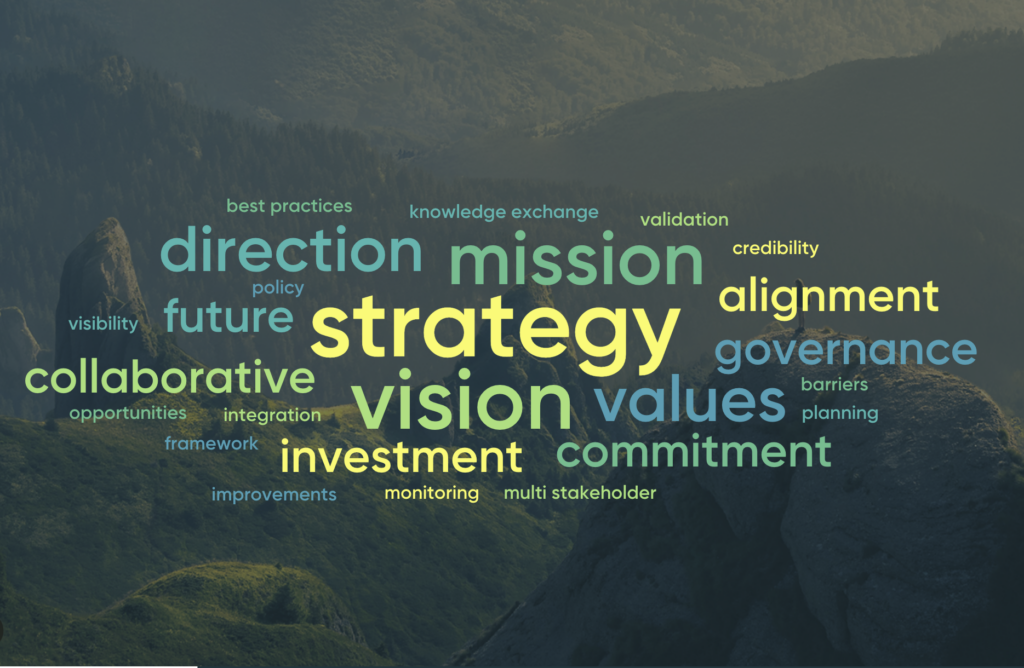
Facilitated discussions, breakout groups, and live polling helped participants interrogate draft vision and mission statements, discuss what “healthy rangelands” look like in practice, and identify the barriers that continue to slow progress. The format encouraged open conversation—surfacing both alignment and areas needing further clarification.
What Was Heard: Key Themes
Across the discussions, several themes appeared again and again:
Recognition and visibility
Rangelands—and the people who steward them—remain under-recognised. Participants highlighted the need for clearer narratives, stronger signals of value, and more visible pathways for acknowledging responsible management.
Credibility and validation
Although good practice exists across many landscapes, weak or inconsistent monitoring systems make it difficult to demonstrate outcomes. Strengthening validation is essential for building trust and enabling connections to markets, finance, and policy.
Investment misalignment
This emerged as a central barrier. Participants noted the wide gap between on-the-ground realities and the financing models currently available, pointing to the need for mechanisms that translate verified outcomes into investable opportunities.
Governance and inclusion
Who participates, how decisions are made, and whose knowledge is centred were all seen as fundamental to the RSC’s impact—not simply procedural choices, but core strategic ones.
Clarifying the RSC’s Role
One of the most valuable outputs of the workshop was a clearer sense of how the RSC’s functions fit together.
Participants reaffirmed that the RSC is, above all, a multi-stakeholder initiative—a place for pastoralists and other rangeland stewards, scientists, private sector actors, policymakers, and civil society to align around responsible rangeland management.
Within this mandate, the RSC also develops and hosts a voluntary sustainability system, including the Global Rangelands Standard and associated pathways for certification and verification. This offers a structured way to recognise responsible practice and link validated outcomes to markets, policies, and investment. Crucially, it is one part of a broader ecosystem—not the entirety of the RSC’s purpose.
Complementing this system are other core functions:
• outcome-based monitoring and validation,
• strengthening visibility and recognition,
• facilitating collaboration and knowledge exchange, and
• helping mobilise finance for improved rangeland management at scale.
This integrated positioning reflects a deliberate choice: to embed certification within a wider architecture of learning, governance, and investment rather than treating it as a stand-alone solution.
Why This Moment Matters
Through this strategy process, the RSC has articulated a shared vision, a concise mission, and a set of values that anchor its work. It has also created internal alignment around how the organisation will grow and operate.
The outcomes now provide a mandate for the next phase: formalising governance, advancing legal establishment, designing pathways for stakeholder engagement, and translating strategic direction into day-to-day operations.
Looking Ahead
The Edinburgh workshop represents more than the end of a strategy season—it marks a shift from exploration toward consolidation. The thinking developed over several months, and refined in September, now forms the foundation for finalising the RSC’s strategic framework.
For partners, members, and interested stakeholders, this moment signals a clearer direction: an organisation choosing to build coherence and credibility before scaling, grounded in shared ownership and long-term commitment.
For more information, contact us at info@rangelandstewardship.org.