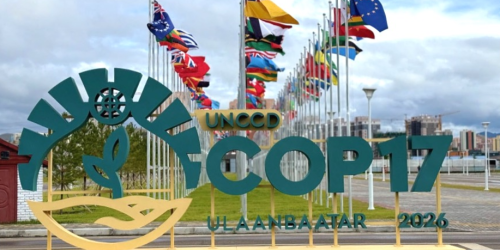
In the closing weeks of 2025, a series of events in Rome brought together governments, pastoralist representatives, international organisations and private-sector actors to mark the official launch of the International Year of Rangelands and Pastoralists (IYRP 2026) and to examine the future of the world’s rangelands.
These discussions highlighted priorities that closely reflect the work of the Rangeland Stewardship Council (RSC): strengthening pastoralist livelihoods, improving how sustainability outcomes are measured, and building stronger links between land stewardship, policy and value chains.
Across the sessions, a consistent message emerged: sustaining rangelands requires not only political commitment and local knowledge, but also practical systems that translate shared ambition into consistent action.
IYRP Opening Ceremony: A Global Call to Action
The official opening ceremony of IYRP2026 at FAO headquarters underscored both the global significance of rangelands and the urgency of addressing land degradation, climate pressures and rural economic challenges.
In his opening remarks, FAO Director-General Dr Qu Dongyu framed the purpose of the International Year clearly:
“This International Year is not just a celebration — it is a call to action.”
The presence of H.E. Ukhnaagiin Khürelsükh, President of Mongolia, was a notable moment. Mongolia has played a central role in advancing the International Year, and the President’s remarks highlighted the importance of restoring rangeland ecosystems, supporting pastoralist communities and strengthening international cooperation.
A pastoralist panel — with speakers from Sápmi in Norway, Ethiopia, Mongolia and India — grounded the discussion in lived experience. Reflections on mobility-based grazing systems, seasonal land use and the transmission of traditional ecological knowledge reinforced a point that is increasingly recognised in policy discussions: effective rangeland management depends on the knowledge and leadership of pastoralists themselves.
Discussions during the thematic sessions also addressed the growing need for coherent sustainability frameworks, monitoring systems and approaches to evaluating ecosystem service outcomes — areas in which the RSC is actively developing to support governments, producers and value-chain actors.
Linking Land Stewardship and Cultural Industries
During the same week, a Memorandum of Understanding for Fashion4Land was signed, highlighting the relationship between natural fibre supply chains, cultural industries and the health of rangeland ecosystems.
The initiative reflects increasing recognition that sustainable sourcing depends on resilient landscapes and viable pastoralist livelihoods. Conversations surrounding the signing demonstrated sustained interest among international stakeholders in understanding how sourcing practices, land management and rural economies intersect.
For the RSC, developments of this kind reinforce the importance of establishing clear and credible frameworks that allow value-chain actors to engage with rangeland stewardship in structured and transparent ways.
Business4Land: From Ambition to Implementation
The Business4Land: Building Sustainable Value Chains for Land Restoration Forum brought together representatives from government, industry and international organisations to examine how value chains can contribute more directly to restoration efforts.
Speakers emphasised that policy commitments alone are not sufficient; practical mechanisms are required to guide responsible sourcing, monitor outcomes and support long-term investment in land stewardship. Ts. Munkhnasan of Mongolia’s Ministry of Food, Agriculture and Light Industry noted:
“Credible science-based systems are essential. We need organisations that certify responsibly — and more like them.”
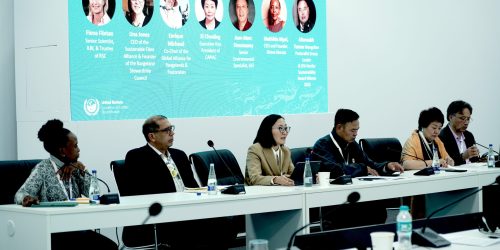
The discussion also highlighted the importance of integrating science, monitoring and local knowledge into practical decision-making frameworks. Reflecting on this, Una Jones, Director of the Rangeland Stewardship Council, observed:
“Sustainable rangeland management relies on a clear framework. Through voluntary sustainability systems — including a global rangelands standard, ecosystem services validation and monitoring frameworks — we bring together science, data and traditional knowledge to support better decision-making across rangeland landscapes.”
These themes closely reflect areas in which the RSC is working to develop practical approaches, including sustainability standards, monitoring frameworks and methods for validating ecosystem service outcomes.
Building Momentum for the Year Ahead
Discussions in Rome pointed to several encouraging developments that continue to shape the work ahead:
- Pastoralist knowledge and leadership are gaining recognition as essential elements of effective rangeland governance.
- Governments are actively seeking practical tools and frameworks to support restoration and sustainable management.
- Value-chain actors are showing increased interest in the landscapes on which their sourcing depends.
- There is growing demand for credible, consistent systems that link science, policy and local practice.
For the Rangeland Stewardship Council, these discussions reinforced the importance of continuing to develop approaches that are scientifically robust, regionally adaptable and grounded in the realities faced by pastoralist communities.
As the International Year progresses, the dialogue initiated in Rome continues to inform partnerships, technical work and collaboration across rangeland regions.
📧 info@rangelandstewardship.org
🌐 rangelandstewardship.org