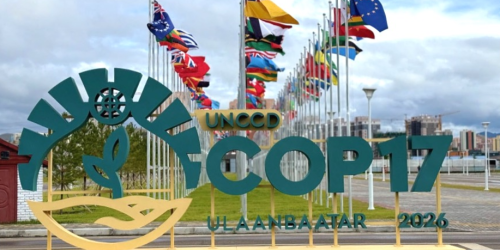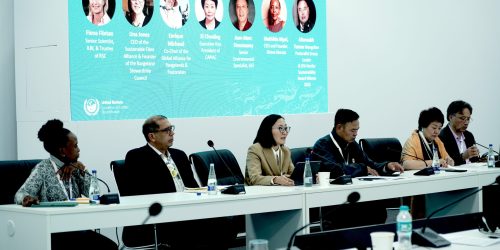
UNCCD COP17 in Mongolia provided an important opportunity for the Rangeland Stewardship Council to engage across a wide range of discussions shaping the future of the world’s rangelands.
Throughout the conference, the RSC was part of conversations spanning responsible stewardship, restoration, monitoring, ecosystem services, sustainable commodities, pastoralist livelihoods, responsible sourcing, markets and finance.
The launch of the Global Rangelands Standard, Version 0.2, the Foundation Standard, was an important milestone within that wider programme. But COP17 also brought something broader into focus: how closely all of these different areas of work are connected.
Again and again, discussions returned to a similar challenge. How can responsible stewardship be connected with credible evidence? How can evidence lead to recognised environmental and social outcomes? And how can those outcomes create stronger links with markets, incentives and investment while remaining meaningful for the pastoralists and communities managing rangelands on the ground?
The opportunity is therefore not simply to develop individual standards, tools or initiatives. It is to strengthen the connections between them.
For the RSC, this was one of the clearest messages to emerge from COP17 and an important indication of where the next phase of our work is heading.
THREE OFFICIAL UNCCD SIDE EVENTS
At the centre of the RSC’s COP17 engagement were three official UNCCD side events, each looking at a different part of this wider system.
Financing Land Restoration at Scale: Investment Pathways for Rangelands brought together government, multilateral finance, conservation, business and technical perspectives to explore what it will take to direct significantly greater levels of public and private investment towards rangeland restoration and responsible management.
The High Level Launch of the Global Rangelands Standard on Land & People Day marked the formal launch of Version 0.2, the Foundation Standard, following several years of development, consultation and technical review.
The Standard provides a common global framework for understanding, supporting and recognising responsible rangeland stewardship. Its launch represented an important step towards creating greater clarity around what responsible management looks like across very different rangeland contexts.
View event flyer and speakers | Explore the Foundation Standard
Value Addition for Sustainable Commodities: Linking Soil Health, Rangelands and Global Markets then extended the discussion along the value chain, connecting responsible stewardship and ecosystem health with monitoring, traceability, responsible sourcing and opportunities to create greater value from sustainably produced rangeland commodities.
Although each event approached rangelands from a different direction, a common thread ran through all three. Better outcomes for rangelands depend on stronger connections between what happens on the ground and the systems that recognise, reward and invest in responsible stewardship.
LANDSCAPES OF LIFE
One of the most distinctive moments of the wider COP17 programme took place beyond the conference venue itself.
RSC colleagues took part in the Mid-COP Landscapes of Life convening in Gorkhi-Terelj National Park, organised with WWF and partners.
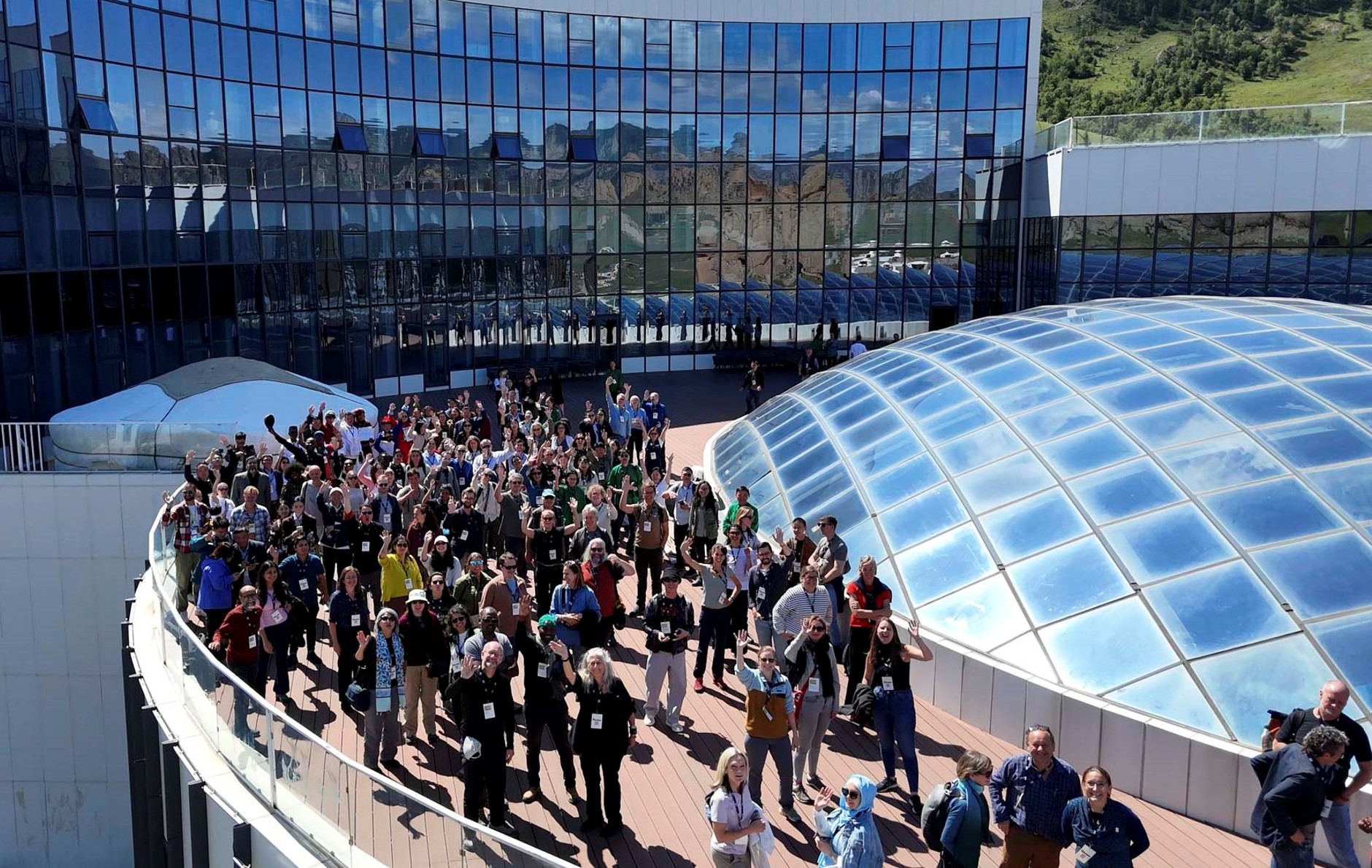
The gathering brought together approximately 200 representatives from more than 70 organisations working across grasslands, savannahs and rangelands, with discussions spanning restoration, ecosystem services, finance, incentives and the systems needed to make sustainable rangeland management economically viable.
Being in the landscape itself gave these conversations a different perspective. Questions around restoration, monitoring and investment become much more tangible when considered alongside the ecological complexity of rangelands and the people whose livelihoods depend upon them.
View the Landscapes of Life Report
For the RSC, this closely reflected the challenge we are seeking to address: connecting responsible management with evidence, outcomes and incentives in ways that remain practical and meaningful on the ground.
BUILDING A STRONGER EVIDENCE BASE
Evidence and monitoring were also prominent across other COP17 engagements.
The RSC took part in discussions with the Landscape Alliance (CIFOR-ICRAF), bringing together scientific, policy, development, Indigenous and local community perspectives around soil data, evidence and rangeland restoration.
A central focus of these discussions was the Global Rangeland Health Monitoring Framework, to which the RSC is contributing. The conversations explored how stronger and more credible approaches to monitoring can improve understanding of rangeland condition and change, while also supporting wider work on the validation of rangeland ecosystem services.
The challenge is not simply to generate more data, but to bring together different forms of evidence in ways that are practical, robust and relevant across diverse rangeland contexts. This includes scientific information, remote sensing, field based monitoring and Traditional Ecological Knowledge.
Ultimately, a stronger evidence base can help create a clearer connection between responsible management, changes in rangeland condition and the environmental and social outcomes that stewardship is intended to support.
Explore the Global Rangeland Health Monitoring Framework
FROM RESTORATION AMBITION TO INVESTMENT
Finance was another recurring theme throughout COP17.
Alongside the RSC’s own Finance Day discussions, STELARR Project activities provided a wider platform for conversations around sustainable rangeland management, restoration and investment.
The launch of the STELARR Rangeland Restoration Investment Hub explored how credible restoration opportunities can be connected more effectively with potential sources of finance. The Global Rangelands Standard also featured in these discussions, highlighting the importance of clear frameworks, credible monitoring and demonstrated outcomes in building confidence for investment.
Learn more about the STELARR Rangeland Restoration Investment Hub
The significance of these discussions went beyond the question of how to attract more capital.
For investment in rangelands to grow, there needs to be greater clarity around what responsible management looks like, how progress is understood and measured, what outcomes are being achieved and how benefits reach the people and communities responsible for managing these landscapes.
These are precisely the connections the RSC is seeking to strengthen.
A CONTINUOUS PRESENCE THROUGHOUT COP17
The RSC’s engagement also extended beyond individual events and discussions.
Together with the Sustainable Fibre Alliance, the RSC maintained a joint pavilion in the COP17 Blue Zone throughout the conference. This created a continuous presence and a meeting point for conversations with governments, international organisations, businesses, technical experts, pastoralist representatives and potential partners.
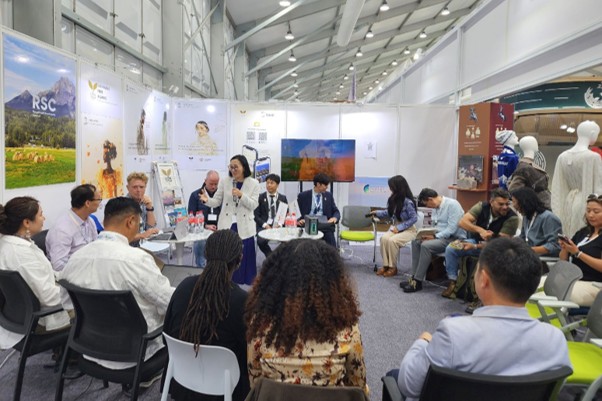
The pavilion gave us space to introduce the RSC’s wider programme of work, but also to hear how others were approaching many of the same challenges in different landscapes, countries and sectors.
Those conversations reinforced that responsible rangeland management can take many different forms, but that greater value can be created by connecting these approaches more effectively.
FASHION4LAND: CONNECTING LANDSCAPES WITH GLOBAL VALUE CHAINS
COP17 also demonstrated why the rangelands conversation cannot stop at the landscape itself.
Through the RSC’s close partnership with SFA, our engagement sits alongside a wider body of work connecting rangelands with the businesses, industries and markets that depend upon them.
The Fashion4Land Forum, part of UNCCD’s Business4Land programme and held with SFA, brought together perspectives from fashion, natural fibres, policy, industry and land stewardship.

For sectors sourcing natural fibres from rangelands, the resilience of the supply chain is ultimately connected to the health of the landscapes and communities from which those fibres originate.
Fashion4Land helped bring this relationship into focus, linking conversations about sourcing, production and value creation with questions about land condition, stewardship and the future of rangeland communities.
This complements the direction of the RSC’s work. If responsible stewardship can be more clearly understood, demonstrated and recognised, businesses and markets can play a stronger role in creating incentives for good management.
RESILIENT THREADS: CONNECTING THE HEALTH OF THE WHOLE SYSTEM
The Resilient Threads Program provided another perspective on why these connections matter.
Through work involving Loro Piana, Maison of the LVMH Group, UNCCD, SFA and industry and conservation partners, the programme explored relationships between healthy rangelands, livestock health, pastoralist livelihoods and responsible sourcing through a One Health perspective.
Learn more about Resilient Threads
This whole system perspective closely aligns with the direction of the RSC’s work. Rangeland condition, animal health, pastoralist livelihoods, production and value chains are deeply interconnected, and understanding these relationships is fundamental to building more resilient landscapes and more responsible supply chains.
Through its partnership with SFA, the RSC is able to connect its work on the Global Rangelands Standard, monitoring and ecosystem services with wider practical experience across pastoralist livelihoods, natural fibre production, responsible sourcing and international value chains.
Resilient Threads therefore represents another part of the broader picture emerging through this partnership, showing how stronger rangeland stewardship can be connected with the health of livestock, the resilience of pastoralist communities and the businesses and value chains that ultimately depend upon these landscapes.
RECOGNISING STEWARDSHIP ON THE GROUND
Perhaps the most important connection of all is with the people managing rangelands themselves.
The SFA Herder Sustainability Awards recognised the role of herders and cooperatives in protecting and managing Mongolia’s rangelands and brought their contribution into the wider COP17 programme.
Watch the Herder Sustainability Awards
Bringing this recognition into the wider COP17 programme was a valuable reminder that pastoralists and the people who manage rangelands must remain at the centre of the international rangelands agenda.
Standards can provide a framework. Monitoring can provide evidence. Markets and finance can provide incentives and resources.
But all of these ultimately depend on the knowledge, decisions and stewardship of the people managing rangelands on the ground.
SEEING HOW THE PIECES FIT TOGETHER
Taken together, the discussions at COP17 showed how closely responsible management, monitoring, evidence, outcomes, markets and investment are connected.
The Global Rangelands Standard provides the common foundation for responsible stewardship.
The developing Global Rangeland Health Monitoring Framework can strengthen understanding of rangeland condition and change, while work on the Rangeland Ecosystem Services Procedure can help identify and assess environmental outcomes associated with stewardship.
But COP17 also reinforced that these technical components cannot stand alone.
Through the RSC’s wider partnerships and collaborations, other parts of the system also come into view, including pastoralist recognition, livestock and fibre production, responsible sourcing, international value chains, restoration, markets and investment.
This is what connecting the pieces means in practice. The RSC provides a point of connection between areas of work that have too often been addressed separately.
MOVING INTO THE NEXT PHASE
Perhaps the most encouraging aspect of COP17 was seeing how many conversations that are often held separately were beginning to overlap.
The RSC’s own programme formed an important part of that picture, but so did the wider initiatives, partnerships and activities taking place alongside it.
Our engagement with the Sustainable Fibre Alliance, UNCCD, IUCN, ILRI, Landscape Alliance, the Global Alliance for Rangelands & Pastoralists, WWF, the Global Environment Facility, FAO, CAPIAC and many others placed the RSC’s work within a much larger international conversation about how rangelands are managed, monitored, recognised, valued and supported.
The next phase is about taking those connections further.
The Foundation Standard provides a platform for practical application, piloting and continued refinement. Work on monitoring and ecosystem services can strengthen the links between management, evidence and outcomes. Collaboration with SFA and other partners can continue to connect this work with pastoralists, producers, value chains and markets. Engagement with governments, international organisations and finance can help explore how stronger recognition, incentives and resources might support responsible stewardship in practice.
COP17 showed that many of the pieces are already there.
The opportunity now is to connect them more effectively, creating a system in which responsible stewardship can be understood, evidence can be strengthened, outcomes can be recognised and the people responsible for the world’s rangelands can be better supported.